Cola de Caballo
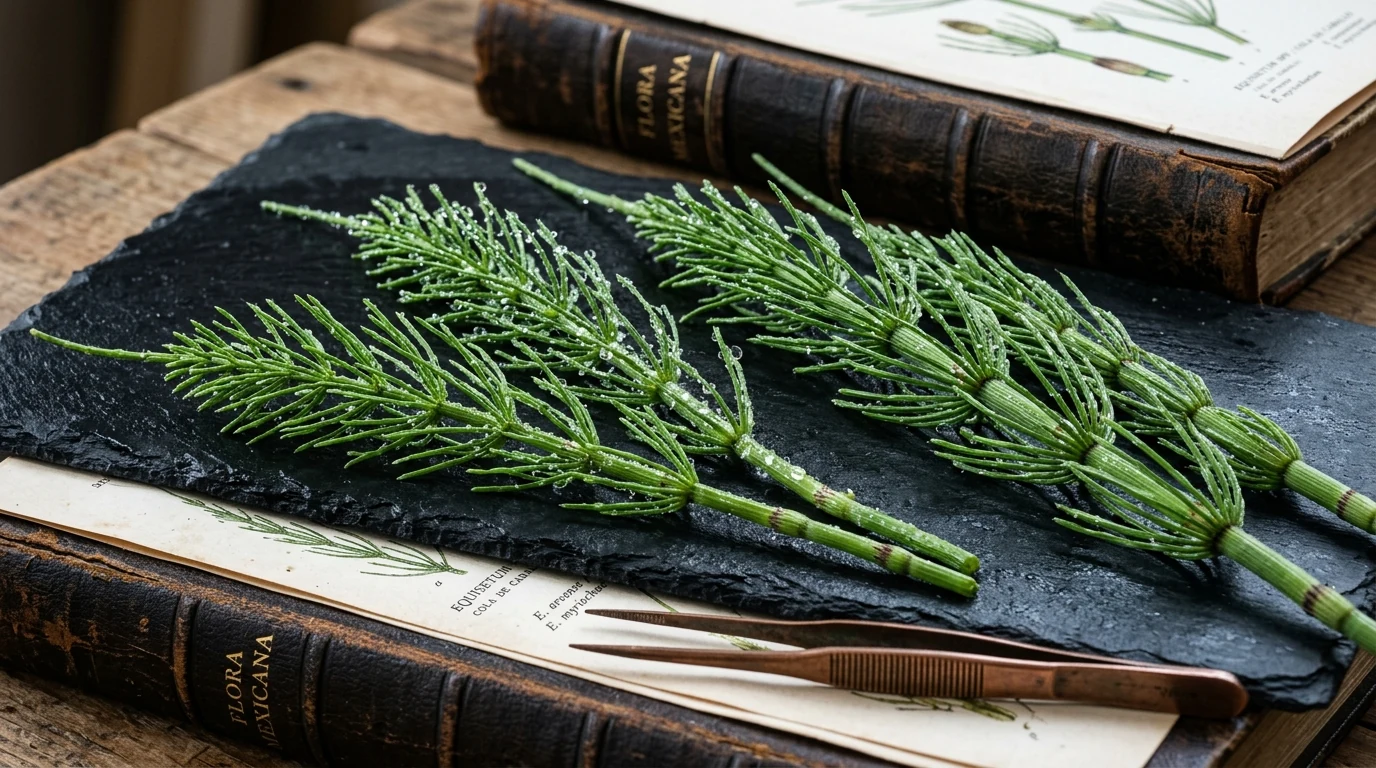

Botanical Verdict: A powerhouse of organic silica. This ancestral ally effectively reduces edema via mild diuresis while remineralizing connective tissues. By strengthening the keratin matrix, it restores resilience to hair and nails. Use with caution: its potency requires mindful dosing to avoid electrolyte depletion.
Primary Therapeutic Niche: Retención de líquidos, remineralización y salud de cabello y uñas
Horsetail’s Healing Compounds: Silica, Flavonoids & Gentle Kidney Support
Beyond its prehistoric silhouette, Horsetail (Equisetum arvense) functions as a biological mineral reservoir. Its primary therapeutic value lies in its exceptional concentration of organic silica, a trace element essential for the structural integrity of connective tissues. Unlike synthetic supplements, the silica in Horsetail is bioavailable, integrating seamlessly into the synthesis of collagen to fortify brittle nails and restore the natural luster of thinning hair.
The plant's efficacy extends beyond aesthetics into systemic detoxification. Its complex profile of flavonoids and saponins facilitates a gentle diuretic effect, encouraging the kidneys to flush excess fluids without the aggressive electrolyte depletion common in pharmaceutical diuretics. This synergy helps reduce edema while simultaneously remineralizing the body.
Key active constituents include:
- Silicic Acid: The cornerstone for bone density and epidermal elasticity.
- Flavonoids: Potent antioxidants that mitigate oxidative stress in renal tissues.
- Potassium: A vital mineral that balances the diuretic process, maintaining cellular homeostasis.
By bridging the gap between mineral replenishment and fluid regulation, Horsetail offers a sophisticated, botanical approach to internal renewal and structural strength.
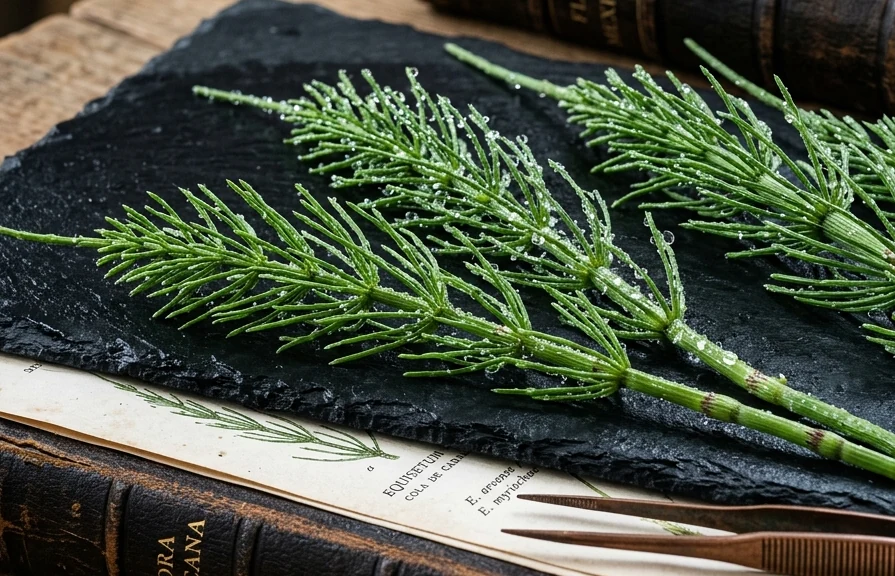
How to Make Horsetail Tea: Exact Dose, Brew Time & Safe Daily Limits
To unlock the silica and minerals within Equisetum arvense, you cannot simply steep it like a delicate chamomile. Because the plant's beneficial compounds are locked in tough, fibrous cell walls, a decoction is required rather than a standard infusion.
Follow this precise method to ensure maximum nutrient extraction without compromising the plant's integrity:
- The Dose: Use 1 to 2 teaspoons (approximately 3-5 grams) of dried horsetail per 250ml of filtered water.
- The Brew: Place the herb and water in a pot. Bring to a gentle boil, then reduce heat and simmer for 10 to 15 minutes.
- The Finish: Strain the liquid and drink it warm or chilled.
While this remedy is a powerhouse for remineralizing connective tissues and reducing edema, moderation is key. To avoid diuretic overuse or interference with potassium levels, limit your intake to two cups per day. It is recommended to follow a cycle: consume for two weeks, then take a one-week break. Always consult a professional if you are managing hypertension or taking diuretic medication.
Product Review & Safety Guide for Organic Horsetail Herb on Amazon
Navigating the vast catalog of organic supplements on Amazon requires a discerning eye, especially when sourcing Equisetum arvense. High-quality horsetail is characterized by its rich concentration of organic silica, a vital trace mineral that acts as a structural scaffold for connective tissues. When reviewing options, prioritize suppliers that provide third-party lab certifications to ensure the herb is free from heavy metals, as this plant naturally bioaccumulates minerals from the soil.
While celebrated for its ability to combat fluid retention and fortify brittle nails and thinning hair, horsetail is a potent botanical that demands respect. Its diuretic properties are effective, but they can trigger significant electrolyte shifts if used indiscriminately.
Essential Safety Precautions:
- Diuretic Interaction: Avoid combining with pharmaceutical diuretics to prevent severe potassium depletion.
- Medical Contraindications: Individuals with kidney disease or diabetes should avoid use due to its impact on glucose levels and renal filtration.
- Duration: Limit continuous intake to short cycles; prolonged use may interfere with the absorption of Vitamin B1.
Choosing a certified organic, cut-and-sifted leaf ensures you receive the botanical integrity necessary for genuine remineralization.
Recommended Herbalism Books for Further Study
Learn to formulate preparations, dose safely, and combine medicinal plants with these reference works reviewed by Edson Álvarez:
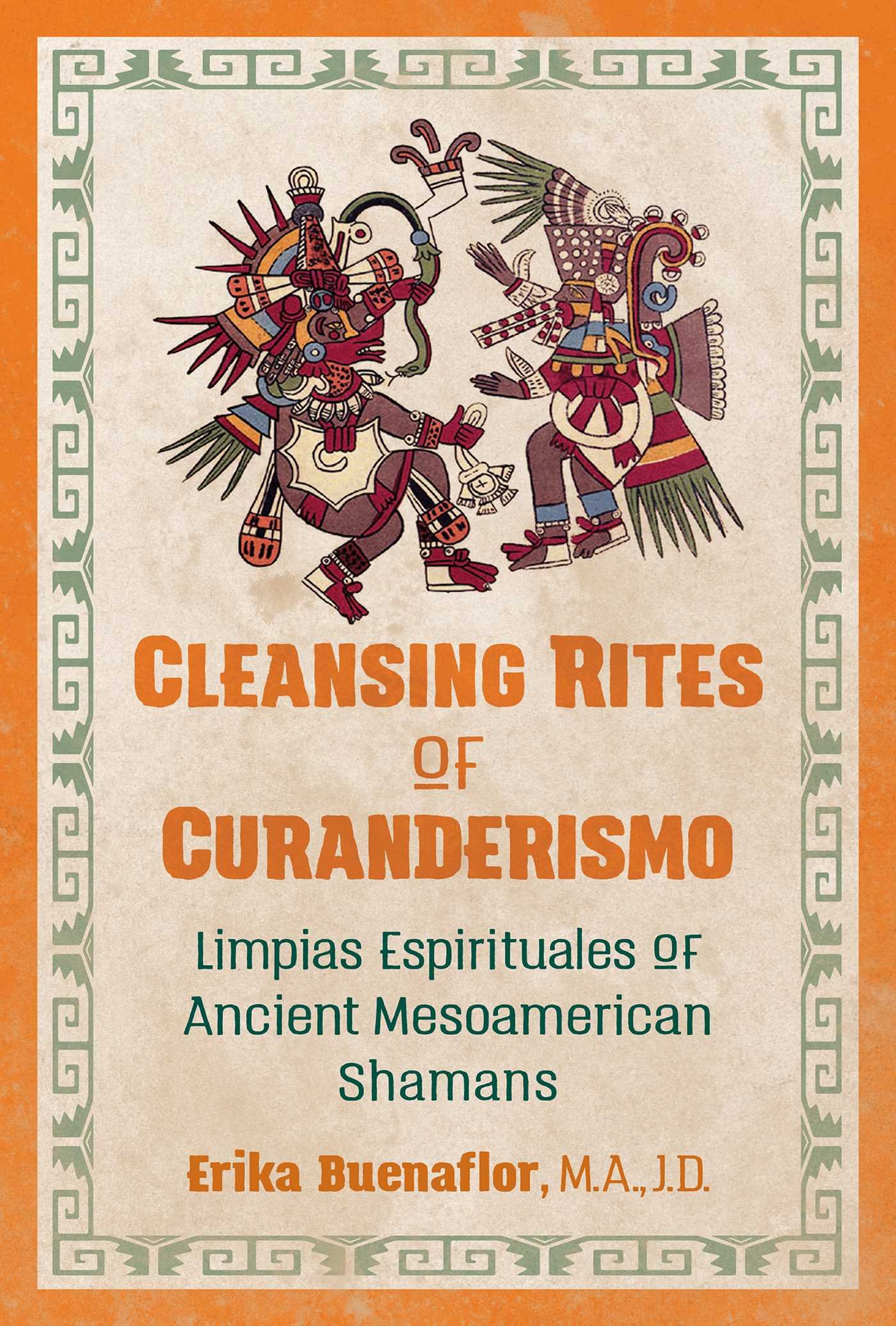
Cleansing Rites of Curanderismo
- ✓ Authentic indigenous Mesoamerican roots (Yukatek Maya and Mexica).
- ✓ Step-by-step instructions for performing limpias at home safely.
- ✓ Includes emotional healing methods like pláticas (heart-straightening talks).

Botiquín de hierbas medicinales
- ✓ Fichas claras de identificación botánica y principios activos
- ✓ Instrucciones prácticas paso a paso para elaborar infusiones, tinturas y ungüentos
- ✓ Enfoque en seguridad con advertencias de uso y contraindicaciones
Cleansing Rites of Curanderismo
- ✓ Instrucciones paso a paso y enfoque práctico
- ✓ Sólida base histórica y raíces indígenas (Maya y Azteca)
- ✓ Variedad de rituales detallados (fuego, agua, barrido)
¿Dónde comprar Cola de Caballo de calidad garantizada?
Explore top-rated available selections of Cola de Caballo with certified purity, customer reviews, and fast shipping on Amazon:
View Available Options for Cola de Caballo on Amazon ↗Frequently Asked Questions about Mexican Herbalism Books
How much horsetail tea should I drink for water retention?
Use 2–3 g (about 1–2 teaspoons) of dried, cut-and-sifted horsetail per 8 oz cup of hot water. Steep covered for 5–10 minutes, strain, and drink 1–2 cups daily for up to 6 weeks, followed by a 2-week break.
Who should avoid horsetail tea?
Avoid horsetail if you are pregnant or breastfeeding, have kidney or heart disease, a thiamine (vitamin B1) deficiency, or take prescription diuretics. Always consult a qualified healthcare provider before regular use.